By Supaorder Team — who we are
White-Label vs Third-Party Delivery Apps
Compare the benefits and drawbacks of white-label ordering systems versus third-party delivery platforms for restaurant owners.

Choosing between white-label ordering systems and third-party delivery apps is one of the most important decisions restaurant owners face today. Each approach has distinct advantages and challenges that can significantly impact your business’s long-term success.
Understanding the Options
White-Label Systems — your own branded ordering platform with complete control over the customer experience, data, and relationship:
- Custom branded mobile and web apps
- Direct customer relationships
- Full data ownership
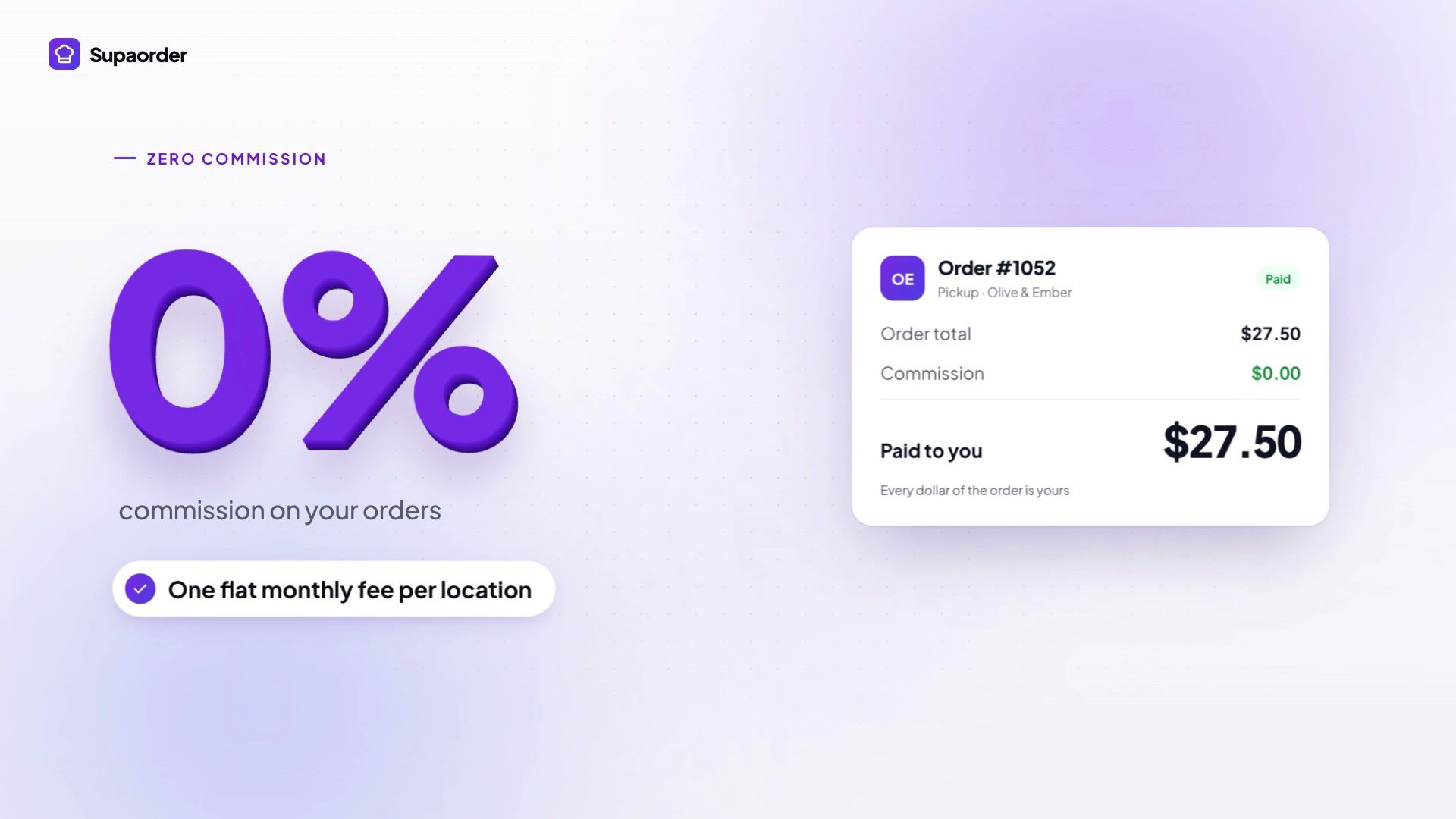
- No commission fees
Third-Party Apps — established platforms like DoorDash, Uber Eats, and Grubhub that provide immediate access to their customer base:
- Instant market access
- Built-in customer base
- Established delivery network
- Quick setup process
Cost Comparison
The financial impact of your choice extends far beyond initial setup costs — and the point where a flat fee overtakes a percentage is a single division you can do on last month’s statement.
Third-Party App Costs:
- Commission Fees: 15-30% of every order — DoorDash charges 15%, 25% or 30% and Uber Eats 20%, 25% or 30% depending on plan
- Delivery and marketing billed separately on some platforms: Grubhub charges a 5-20% marketing commission plus a delivery fee starting at 10%
- Paid placement on top: ad products are bid per order, not included in the commission
- Payment Processing: typically 2.9% + $0.30 per transaction, and excluded from the commission rate on some plans
- Annual Cost: roughly $22,500-$45,000 in commission alone on $150K of marketplace revenue
White-Label Costs:
- Monthly Subscription: $129 per location/month in the US ($1,548/year), dropping to $109 from your fourth location
- Commission Fees: $0
- Setup Costs: Often waived
- Payment Processing: Stripe’s standard 2.9% + $0.30, billed direct with no platform markup
- Annual Savings: $13,450-$43,450 compared to third-party apps
Customer Relationship Control
One of the most significant differences lies in customer relationship ownership.
With third-party apps, you’re essentially renting customers. With white-label systems, you own the relationship.
White-Label Advantages:
- Direct customer communication
- Complete customer data access
- Personalized marketing campaigns
- Brand loyalty development
- Custom loyalty programs
- No competitor visibility
Third-Party Limitations:
- Limited customer data access
- Platform controls communication
- Customers see competitor options
- Generic ordering experience
- Platform-dependent marketing
- Risk of customer poaching
Brand Control and Experience
Your brand identity and customer experience are crucial differentiators in the competitive restaurant market.
- White-Label: Complete control over branding, user interface, and customer journey
- Third-Party: Limited customization within platform constraints
- White-Label: Consistent brand experience across all touchpoints
- Third-Party: Generic platform experience with minimal brand presence
Market Reach and Customer Acquisition
Third-party apps offer immediate access to established customer bases, while white-label systems require building your own audience.
Customer Acquisition Strategies:
Third-Party Apps:
- Instant access to platform users
- Platform-driven discovery
- Paid promotional opportunities
- Algorithm-dependent visibility
White-Label:
- Social media marketing
- Email marketing campaigns
- Local SEO optimization
- Referral programs
Long-Term Business Impact
Consider the long-term implications of your choice on business growth and sustainability.
White-Label Benefits:
- Predictable monthly costs
- Scalable without increasing fees
- Asset building (customer database)
- Independence from platform changes
- Higher profit margins
- Business valuation increase
Third-Party Risks:
- Increasing commission rates
- Platform policy changes
- Dependency on external platform
- Limited growth potential
- Reduced profit margins
- Customer relationship vulnerability
Making the Right Choice
The best approach depends on your restaurant’s specific situation, goals, and resources. If you have narrowed it down to specific white-label vendors, we keep side-by-side comparisons against ChowNow, Flipdish, UpMenu, Restolabs and Fleksa — every competitor figure quoted from that vendor’s own published pages, dated, and honest about the rows we lose.
Choose White-Label If:
- You want to build long-term customer relationships
- Profit margins are important to your business model
- You have existing marketing channels and a customer base
- Brand control and consistency are priorities
- You’re planning for long-term growth and scalability
Consider Third-Party If:
- You need immediate market access
- Marketing and customer acquisition aren’t your strengths
- You’re testing market demand for delivery
- A short-term revenue boost is the primary goal
- You lack resources for platform development
Hybrid Approach
Many successful restaurants use both approaches strategically:
- Start with Third-Party: Gain initial market traction and test demand
- Build Your Platform: Develop a white-label system while maintaining third-party presence
- Migrate Customers: Gradually move customers to your platform with incentives
- Optimize Mix: Maintain third-party for discovery while focusing on direct orders
Ready to Take Control?
Supaorder’s white-label platform gives you all the benefits of owning your customer relationships while eliminating the technical complexity. And if you are already on a white-label tool that is going away — GloriaFood shuts down on 30 April 2027 with no export path — the move is mostly a menu rebuild, which is the part we do for you.