By Supaorder Team — who we are
Customer Loyalty Programs That Actually Work
Learn how to design and implement customer loyalty programs that increase repeat orders and customer lifetime value.
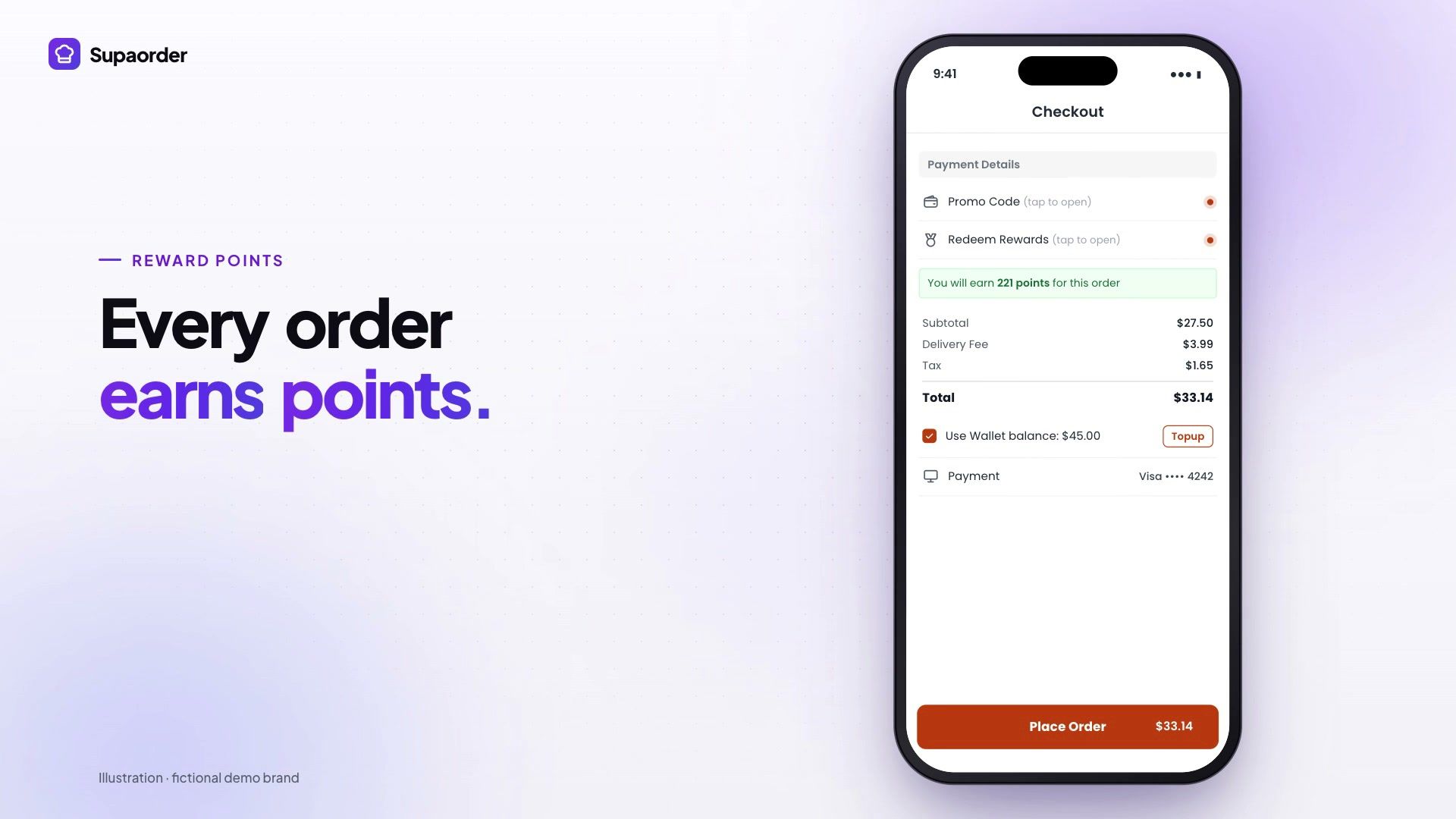
Customer loyalty programs are one of the most effective ways to increase repeat business and boost revenue. With digital ordering platforms, implementing and managing loyalty programs has become easier and more sophisticated than ever before.
Why Loyalty Programs Matter
The economics of loyalty are well established across the industry:
Why loyalty pays:
- Acquiring a new customer costs five to 25 times more than retaining an existing one, and a 5% lift in retention raises profits by 25% to 95%
- Rewards move real orders — PYMNTS Intelligence found loyalty influences the decision for 61% of delivery customers and 54% of quick-service patrons
- The audience is willing — eight in 10 adults say they would join a loyalty program at a favourite local restaurant, rising to nearly nine in 10 among Gen Z and millennials
- Loyalty program members order more frequently and are easier to re-engage
- Points and tier incentives nudge members toward larger baskets
Loyalty is one lever among several on digital order value — menu design, upselling and delivery reach are the others, and they are covered together in the wider guide to growing revenue through digital ordering.
Types of Loyalty Programs
Different loyalty program structures work better for different types of restaurants and customer bases. Supaorder runs points, cashback, tiers and paid memberships against one customer balance, so the choice below is a configuration decision rather than a platform decision.
1. Points-Based Programs
Customers earn points for every purchase that can be redeemed for rewards.
Points Program Examples:
- 1 point per $1 spent, 100 points = $10 reward
- Bonus points for specific menu items or days
- Double points during slow periods
- Birthday bonus points
2. Tier-Based Programs
Customers unlock better benefits as they spend more, encouraging increased engagement.
- Bronze Tier: 5% discount after 5 orders
- Silver Tier: 10% discount + free delivery after 15 orders
- Gold Tier: 15% discount + exclusive menu items after 30 orders
- Platinum Tier: 20% discount + priority service after 50 orders
3. Cashback Programs
Simple percentage-based rewards that customers can use on future orders. Cashback tends to satisfy customers because the value is immediately clear and tangible — no conversion math, no expiring point balances to decode.
Designing Your Loyalty Program
A successful loyalty program requires careful planning and consideration of your customer base and business goals.
Step 1: Define Your Goals
- Increase Visit Frequency: Focus on time-based rewards
- Boost Average Order Value: Implement spending thresholds
- Attract New Customers: Offer sign-up bonuses
- Reduce Churn: Create win-back campaigns
Step 2: Choose Reward Structure
Reward Options:
- Percentage discounts (10%, 15%, 20%)
- Fixed dollar amounts ($5, $10, $15 off)
- Free menu items (appetizer, dessert, entree)
- Free delivery or service upgrades
- Exclusive menu access
- Early access to promotions
Earning Mechanisms:
- Dollar amount spent
- Number of visits
- Specific menu items ordered
- Social media engagement
- Referral bonuses
- Review submissions
Implementation Best Practices
The success of your loyalty program depends on how well it’s implemented and promoted.
Make It Simple
- Easy Enrollment: One-click signup during first order
- Clear Value Proposition: Customers should immediately understand benefits
- Automatic Tracking: No cards or codes to remember
- Transparent Progress: Show points balance and progress to next reward
A program that only works online is half a program. The counter tablet that shows a walk-in customer the same balance their app shows is included at every location rather than sold as a separate app — which is the difference between a scheme your staff mention and one they forget.
Promote Effectively
Promotion Strategies:
- Prominent placement on website and app
- Staff training to mention program benefits
- Email marketing campaigns
- Social media promotion
- In-store signage and table tents
- Receipt messaging
Advanced Loyalty Strategies
Take your loyalty program to the next level with these advanced techniques.
Personalization
- Behavioral Targeting: Offer rewards based on ordering patterns
- Preference-Based Rewards: Discounts on frequently ordered items
- Timing Optimization: Send offers when customers typically order
- Lifecycle Campaigns: Different rewards for new vs. long-term customers
Gamification
Gamification Elements:
- Progress bars showing advancement to the next tier
- Badges for achievements (first order, 10th visit, etc.)
- Limited-time challenges and bonus point opportunities
- Leaderboards for top customers
- Surprise rewards and random bonuses
Measuring Success
Track these key metrics to evaluate your loyalty program’s effectiveness:
- Enrollment Rate: Percentage of customers who join the program
- Active Participation: Members who earn/redeem rewards regularly
- Repeat Purchase Rate: How often members return
- Average Order Value: Spending difference between members and non-members
- Customer Lifetime Value: Long-term value of loyalty members
- Redemption Rate: Percentage of earned rewards that are used
Common Pitfalls to Avoid
Loyalty Program Mistakes:
- Making rewards too difficult to earn
- Complicated point systems that confuse customers
- Forgetting to promote the program consistently
- Not personalizing offers based on customer data
- Failing to refresh rewards and keep the program exciting
- Ignoring program performance metrics
Ready to Launch Your Loyalty Program?
Supaorder includes points, tiers, cashback, memberships and the in-store loyalty tablet in every plan, with per-campaign analytics on top. Start building customer loyalty and increasing repeat business today.